Guide to Puppy Socialisation Windows
- Dominika Buczma

- Jun 5
- 6 min read
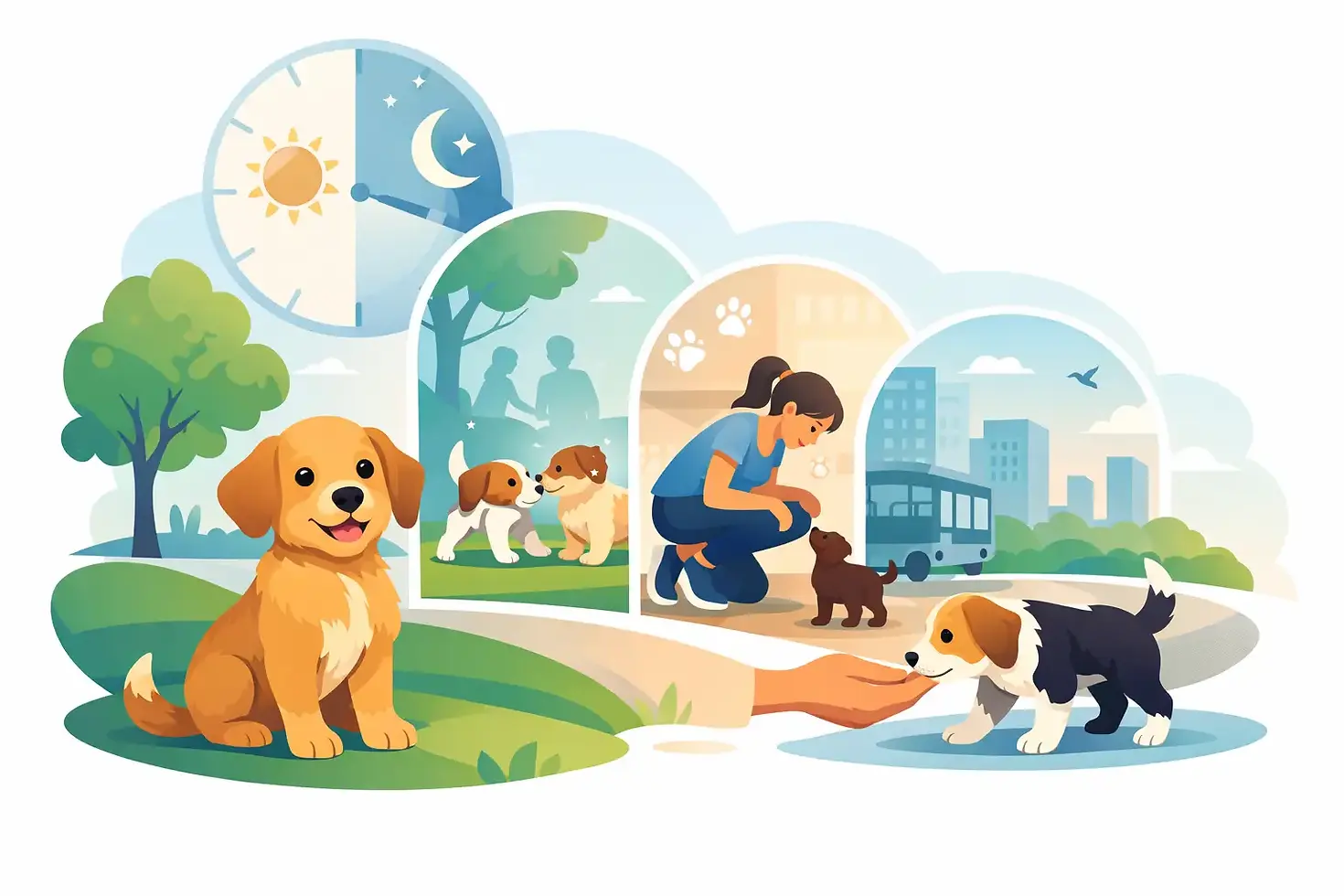
The first time a puppy freezes at a wheelie bin, shrinks from a friendly stranger, or panics at the sound of traffic, owners often assume the problem appeared out of nowhere. In reality, those reactions are usually shaped much earlier. A good guide to puppy socialisation windows helps you understand when your puppy is most open to learning about the world, and how those early experiences influence behaviour long after puppyhood.
Socialisation is not about making a puppy greet everything and everyone. It is about helping them build safe, calm, neutral associations with the people, places, sounds, surfaces and situations they are likely to live with. Done well, it supports resilience, confidence and better decision-making. Done badly, or rushed, it can create the very problems owners were trying to avoid.
What puppy socialisation windows actually mean
A socialisation window is a developmental period when puppies are particularly receptive to new experiences. During this time, the brain is learning quickly and forming lasting associations. That is why early exposure matters, but it is also why poor experiences matter just as much.
In practical terms, the main socialisation period sits roughly between 3 and 12 weeks, with some flexibility depending on the individual puppy, their breeding, early handling and overall temperament. Learning does not stop at 12 weeks, of course. Puppies continue to develop through adolescence and beyond. What changes is how easily they accept novelty and how strongly caution or avoidance can begin to appear.
This is where many owners get mixed messages. They hear that they must show the puppy everything before a certain age, then feel pressured to do too much too soon. The truth is more measured than that. Quality matters more than quantity. Ten calm, well-managed exposures are worth far more than fifty overwhelming ones.
A guide to puppy socialisation windows by age
3 to 5 weeks - breeder and early environment
Most owners do not have the puppy at this stage, but it still matters. Early handling, appropriate exposure to household sounds, gentle human contact and time with littermates all lay groundwork. Puppies learn from their mother and siblings how to communicate, recover, and cope with frustration.
This is one reason responsible breeding and rearing are so important. A puppy that has had poor early experiences may need more careful support later, even if they appear confident at first glance.
6 to 8 weeks - curiosity with limited life experience
At this stage, puppies are usually open, curious and still relatively willing to approach novelty. This is often when they move to a new home, which means their world changes very quickly. The priority should be stability, routine and gentle exposure rather than constant excitement.
Simple experiences matter here. Different floor surfaces, normal household noises, calm visitors, short car journeys and brief periods of separation can all help if introduced thoughtfully. The key is to watch the puppy in front of you rather than working through a social checklist.
8 to 12 weeks - the prime learning period
This is the stage most people mean when they talk about puppy socialisation. Puppies are highly impressionable, and this can work in your favour if experiences are calm, positive and well paced. It can also work against you if the puppy is flooded, frightened or repeatedly pushed beyond what they can cope with.
This is the age to focus on neutral exposure to everyday life. Seeing children from a safe distance, hearing buses, watching cyclists pass, walking on paving, gravel and grass, and calmly observing other dogs can all be useful. Interaction is not always the goal. Often, the better lesson is that the world can happen around them without needing a reaction.
12 to 16 weeks - confidence building with more care
By now, many puppies begin to show stronger opinions. Some become bolder and pushy, others more cautious. A common mistake at this stage is assuming the socialisation opportunity has been missed. It has not. You simply need to be more thoughtful.
This is often when a puppy starts showing concern about things they ignored a fortnight earlier. That does not mean you have failed. Development is not linear. Keep sessions short, set the puppy up well, and avoid forcing investigation. Confidence grows through successful repetition, not pressure.
Common mistakes during the puppy socialisation window
One of the biggest errors is confusing socialisation with unrestricted interaction. Letting every person stroke the puppy and every dog rush into their space may look sociable, but it often teaches over-arousal, frustration or defensiveness. Puppies need good experiences, not unlimited access.
Another mistake is taking the puppy into busy environments before they are ready. A retail park on a Saturday, a crowded pub garden, or a chaotic family gathering can be too much for some young dogs. Owners sometimes mean well and want the puppy to get used to everything, but repeated overwhelm tends to reduce confidence rather than build it.
There is also a tendency to focus only on what the puppy likes. A naturally bold puppy may happily approach strangers, charge towards other dogs and bounce through new environments. That can be mistaken for excellent socialisation, when in fact the puppy is learning poor impulse control and very little neutrality. Confidence without regulation is not the same as stability.
How to socialise a puppy properly
Good socialisation starts with observation. If your puppy is loose in body, willing to take food, able to look around and recover quickly, they are probably coping well. If they are freezing, backing away, vocalising, refusing food or becoming wild and frantic, the situation is too much.
Distance is one of your best tools. A puppy does not need to stand next to a bin lorry to learn that bin lorries exist. They can watch from far enough away to stay calm, then gradually work closer over time if needed. The same applies to children, traffic, livestock, other dogs and unfamiliar environments.
Use food where appropriate, but do not rely on bribery to drag the puppy through discomfort. Food should support learning, not mask distress. In some cases, simply allowing the puppy to observe quietly and leave feeling safe is the right decision.
Short sessions are usually best. Five steady minutes can achieve more than half an hour of overexposure. Puppies tire quickly, and tired puppies make poorer decisions. Keep experiences clean and manageable.
Socialisation and vaccination - getting the balance right
This is where owners often feel torn, and fairly so. You need to protect physical health while also making use of valuable learning periods. The answer is not to keep a puppy in complete isolation until the final vaccination has taken effect.
Safer social exposure can begin before full vaccination through being carried in public places, travelling in the car, sitting on a blanket while watching the world, hearing household and street sounds, and meeting known, healthy, vaccinated dogs in controlled settings. You can build a great deal of useful experience without putting the puppy on every pavement or into high-risk dog areas.
Your vet can advise on local disease risk, but behaviour matters here too. Missing early exposure altogether can create problems that are far harder to resolve later.
When a puppy seems worried during a socialisation window
If your puppy is concerned about something, resist the urge to over-comfort with fussing or to insist they face it head on. Neither extreme is especially helpful. Instead, create space, stay calm, and let the puppy gather information at a level they can handle.
If the worry persists, becomes broader, or starts to affect daily life, it is sensible to get professional support early. Mild uncertainty can harden into established fear if it is repeatedly mishandled. Early intervention is usually simpler, kinder and more effective than waiting for the dog to grow out of it.
At Dog’s Perspective, this is often where tailored guidance makes the difference. Puppies do not all need the same plan, and owners benefit from knowing when to push on, when to pause, and when to change the picture altogether.
The real aim of early socialisation
The goal is not a puppy who loves everything. That is unrealistic, and for some dogs, undesirable. The real aim is a dog who can move through everyday life with trust, recovery and emotional stability. A dog who can notice the world without feeling the need to chase it, greet it, avoid it or defend themselves from it.
That kind of behaviour is built early, but it is also protected by what you do next. Training, rest, clear boundaries, appropriate play, and careful exposure through adolescence all matter. Socialisation windows open opportunities, but they do not replace ongoing education.
If you approach those early weeks with patience and good judgement, you are not just ticking off experiences. You are shaping how your puppy feels about the world, and that matters far more than any socialisation checklist ever will.


Comments