How to Manage Dog Separation Distress
- Dominika Buczma

- Jun 3
- 6 min read
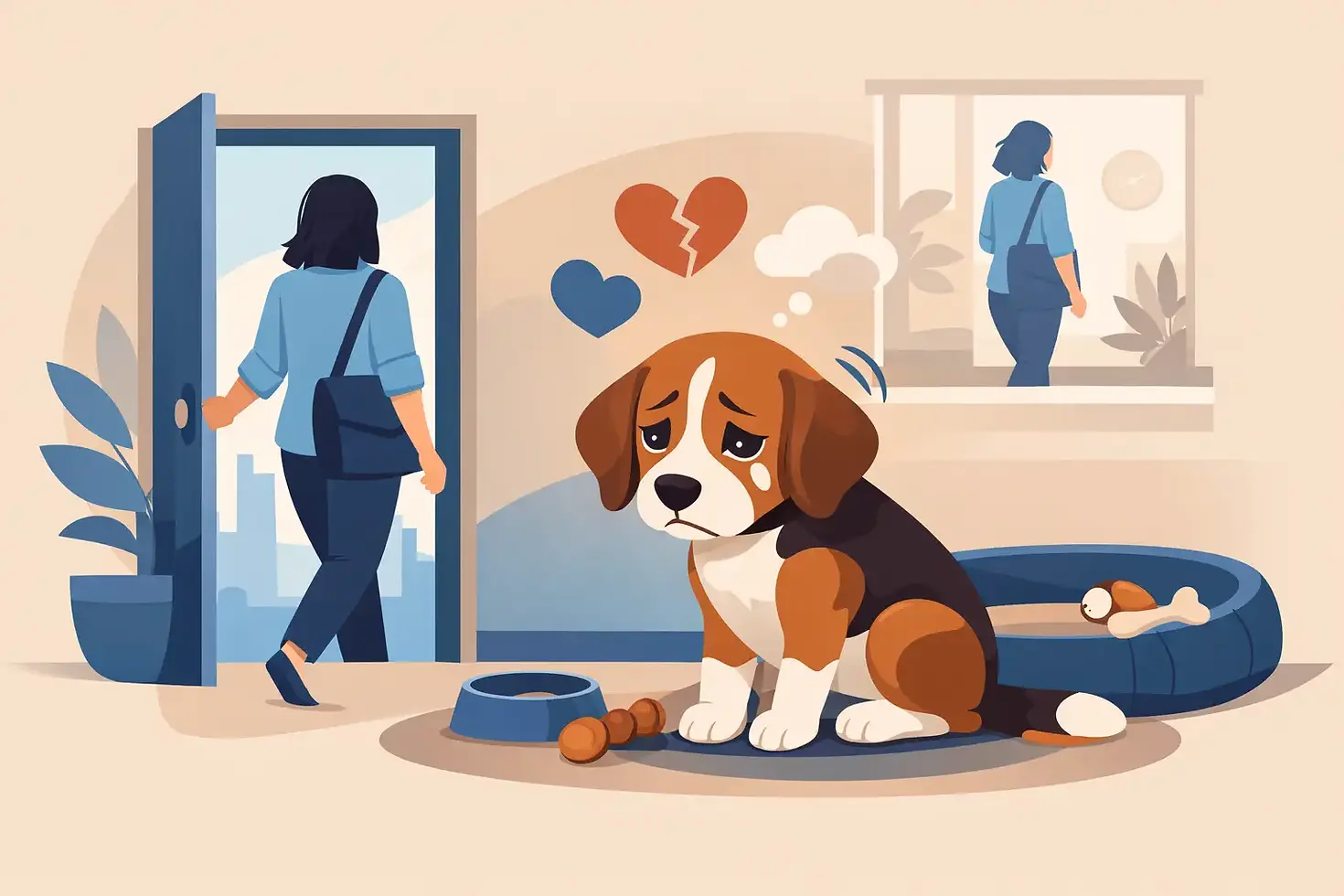
The signs usually start small. Your dog shadows you to the loo, becomes unsettled when you pick up your keys, or starts pacing the moment you close an internal door. By the time owners start searching for how to manage dog separation distress, they are often already dealing with barking, destruction, toileting indoors, attempts to escape, or a dog that is clearly panicking when left alone.
That matters, because separation distress is not a dog being difficult or spiteful. It is an emotional response. If a dog feels unsafe when isolated from a person, the behaviour you see is the outward sign of stress. Treating it as disobedience tends to make the problem worse. Real progress comes from understanding why your dog is struggling, then building the skills and emotional resilience that have not yet developed.
What separation distress actually looks like
Separation distress is a welfare issue first and a training issue second. Some dogs vocalise the whole time they are left. Others drool, pant, scratch at doors, chew frames, raid bins, or soil the house despite being otherwise clean. Some simply shut down, stand frozen by the door, or refuse food when left. Quiet dogs can still be distressed.
It is also worth separating distress from boredom, incomplete house training, barrier frustration, or a dog that has simply never learned to settle. There can be overlap. A young dog with very little independence training may show milder signs than a dog in full panic, but the plan should still be based on what the dog is feeling, not just what the owner finds inconvenient.
Video is often useful here. Many owners are understandably shocked to see what happens after they leave. A dog that looks calm as the front door closes may start escalating within seconds. Without seeing the pattern, it is easy to underestimate the severity or misread the trigger.
How to manage dog separation distress properly
If you want to know how to manage dog separation distress in a way that lasts, start by moving away from quick-fix thinking. There is no reliable shortcut. You are not trying to tire the dog out enough that they pass out, nor are you teaching them to "get over it" through repetition. You are changing the dog’s emotional response to being apart from you and teaching practical coping skills alongside that.
That means the right plan is usually built around management, gradual exposure, routine assessment, and a realistic view of the dog in front of you. The exact pace depends on severity. A mildly dependent adolescent dog and an adult dog in true panic do not need the same starting point.
Step one: reduce rehearsal of panic
Every full-blown distressed episode strengthens the problem. If your dog is regularly left longer than they can cope with, training progress is much harder. As far as possible, arrange things so your dog is not pushed into repeated panic while you work on the issue. That may mean using family support, adjusting work patterns, arranging day care with the right environment, or building short absences around times the dog is genuinely able to cope.
This is often the least convenient part of the process, but it matters. You cannot ask a dog to learn calmly if they are repeatedly overwhelmed.
Step two: identify the true triggers
For some dogs, the trigger is the actual absence. For others, the distress starts much earlier. Putting shoes on, picking up a bag, walking towards the hallway, closing a stair gate, or even showering with the bathroom door shut can all become predictors.
Good training looks closely at the sequence. If your dog is already highly aroused before you leave, that is where work needs to start. Owners sometimes focus only on the front door, when the dog has actually been worrying for ten minutes beforehand.
Step three: teach independence when you are home
Many distressed dogs have never learned that distance from their person is safe. This is not a criticism. It often develops gradually, especially in puppies, rescue dogs, dogs after illness, or dogs whose owners are home most of the time.
Start with small, manageable moments of separation in the house. That might mean your dog settling on a bed while you move around the room, then while you step briefly into another room, then while a door is gently closed for a second or two. The goal is not to trick the dog. The goal is to create repeated experiences of calm, predictable absence at a level they can handle.
If your dog gets up, follows, vocalises, or becomes tense, the step is too difficult. Progress comes from working under threshold, not by pushing through it.
Step four: build a reliable settle
A dog that cannot switch off generally struggles more with being left. Independent relaxation is a skill, and like any skill it can be taught. Calm reinforcement for lying on a bed, chewing appropriately, or resting without constant interaction can make a real difference.
This is where routine helps. Predictable feeding times, rest periods, exercise that meets the dog’s needs without over-arousal, and a home environment that supports sleep all matter. A dog that is chronically overtired or constantly stimulated may look energetic, but their coping capacity is often poor.
Common mistakes when dealing with separation distress
One of the biggest mistakes is making departures and returns highly emotional. Long goodbyes, repeated reassurance, or greeting the dog as if they have survived an ordeal can add weight to the whole event. That does not mean being cold. It means being calm, consistent, and unremarkable.
Another is relying solely on enrichment. A stuffed food toy can be useful if the dog is relaxed enough to eat it, but enrichment is not a treatment on its own. Many genuinely distressed dogs will ignore food entirely once the absence becomes too difficult.
Crate use is another area where owners need care. For some dogs, a crate supports rest and security. For others, especially those with separation-related panic, it can intensify distress and increase the risk of injury if they attempt to escape. The equipment is not the answer in itself. Its effect depends on the dog.
Finally, avoid punishment. Telling off a dog for destruction, barking, or indoor toileting after an absence does not teach confidence. It simply adds more stress and confusion.
How to progress without going too fast
When working out how to manage dog separation distress, owners often ask how long each stage should take. The honest answer is that it depends. Severity, age, history, general resilience, breed tendencies, daily routine, and owner consistency all influence progress.
For some dogs, early improvement comes fairly quickly once panic is no longer being rehearsed. For others, especially where distress is severe or long-standing, progress is measured in very small increments. That can feel frustrating, but slow work is usually what prevents setbacks.
It helps to keep records. Note what happened before the absence, how long the dog was left, what behaviour was seen, and whether the dog recovered easily. Patterns appear quickly when they are written down. You may notice that your dog copes better after a quiet sniff walk than after exciting ball play, or that internal door separations are still too difficult in the evening when they are tired.
When you need professional help
If your dog is injuring themselves, panicking within seconds, unable to eat, attempting to escape, or showing distress even during very short separations, structured professional support is sensible. The same applies if there are other behaviour concerns in the picture, such as noise sensitivity, reactivity, poor frustration tolerance, or guarding. These issues can interact.
A proper behaviour plan should look at the whole dog - not just the leaving routine. Health, sleep, lifestyle, relationship patterns, environment, and previous learning all matter. In some cases, veterinary input is also appropriate, particularly where anxiety is severe or longstanding. There is no shame in that. Good welfare-led support uses the right tools for the dog in front of us.
At Dog’s Perspective, this is exactly why behaviour work is approached by looking for root cause rather than chasing symptoms. Separation distress is rarely solved by one tip or one product. It improves when the training plan fits the dog properly and the owner has clear, honest guidance.
Helping your dog feel safer alone
Your aim is not to create a dog who never cares that you have gone. It is to create a dog who can cope. That is a more realistic and fairer goal. Some dogs will always prefer company. What we want is for absence to feel manageable rather than threatening.
That takes patience, and sometimes a complete reset in expectations. If you have been dealing with this for months, you are not failing because your dog needs a slower process. You are doing the right thing by taking the emotion seriously and addressing it properly.
Small wins count here. A dog who settles behind a door for thirty seconds without worry is learning something valuable. A dog who no longer panics when you pick up your keys is making progress. Keep the work calm, keep it consistent, and let confidence grow at the pace your dog can genuinely handle.


Comments