Dog Separation Anxiety Help That Works
- Dominika Buczma

- 5 days ago
- 6 min read
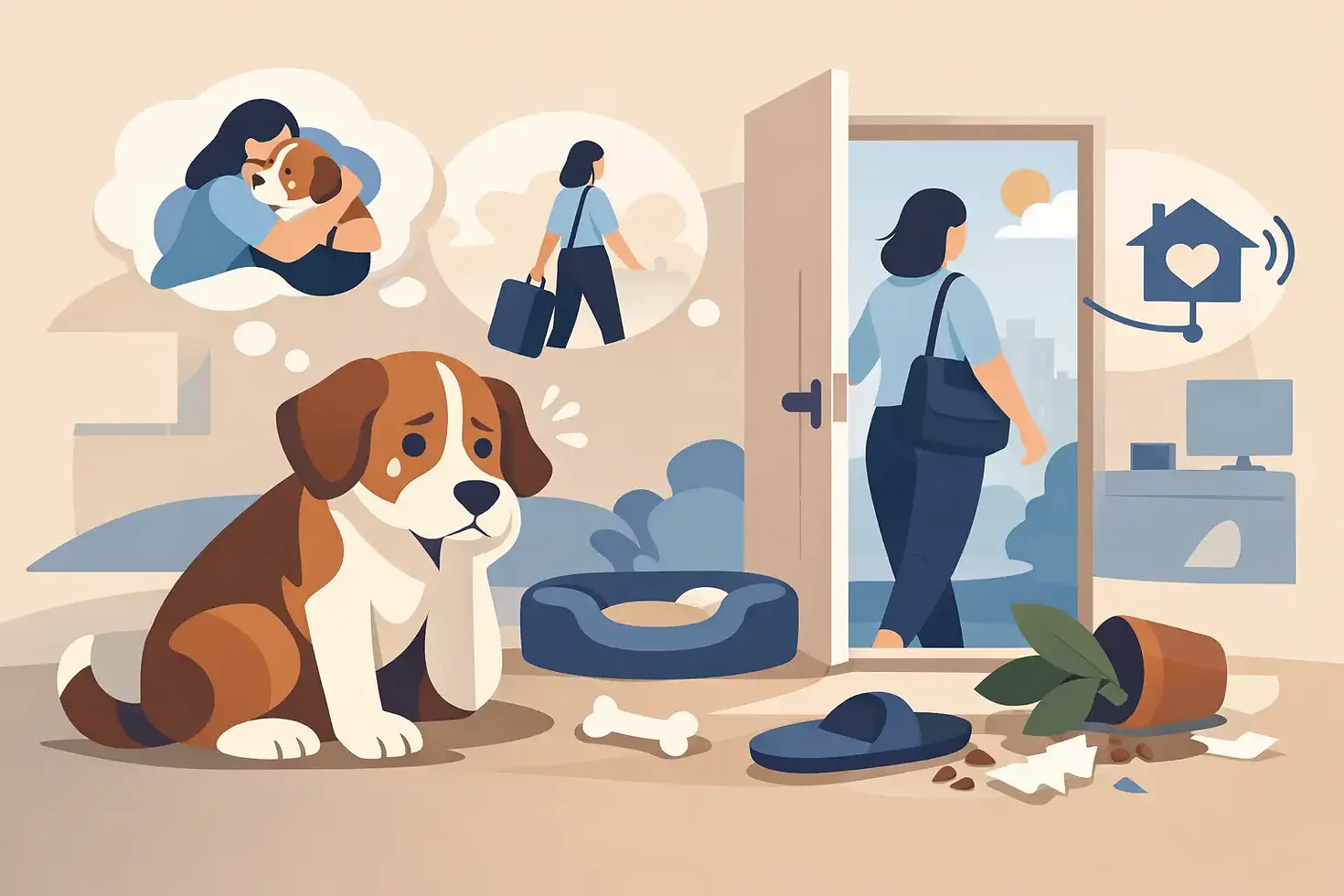
You leave the house for twenty minutes and come back to shredded cushions, scratched doors, or a dog who is panting, pacing and unable to settle. That is not stubbornness or spite. If you are looking for dog separation anxiety help, the first step is understanding that this behaviour is driven by distress, not disobedience.
Separation-related problems can be deeply upsetting for owners. They affect the dog’s welfare, create tension at home, and often leave people feeling guilty, frustrated or trapped. The good news is that with the right plan, many dogs can improve significantly. The less helpful news is that quick fixes rarely work. Lasting progress comes from identifying the root cause, lowering the dog’s stress, and building confidence in a structured way.
What separation anxiety actually looks like
A dog with separation anxiety is not simply unhappy that you have gone out. They are struggling to cope with being left, being away from a particular person, or losing access to the social security they depend on. That distress can show up in different ways.
Some dogs vocalise the moment they hear keys or see shoes come out. Others begin to panic only after the front door closes. Common signs include barking, howling, destructive behaviour around exits, toileting indoors despite being house trained, drooling, trembling, pacing, and refusing food when alone. In more severe cases, dogs can injure themselves trying to escape.
It is also worth saying that not every dog who makes a mess when left has separation anxiety. Boredom, under-stimulation, incomplete house training, noise sensitivity, frustration, or a medical issue can look similar on the surface. This is where owners can lose time by treating the symptom rather than the cause.
Why dog separation anxiety help needs to start with the cause
There is no single reason dogs develop separation issues. Some have always struggled to be alone. Others cope well for months or years and then regress after a house move, a change in routine, illness, rehoming, loss of a companion, or a frightening event linked to being left.
Breed tendencies can play a part, but they are not the whole story. A dog’s early development, level of dependence on the owner, general confidence, quality of rest, and daily stress load all matter. Dogs that are already living in a heightened state can find separation much harder because they have very little emotional capacity left when the owner leaves.
That is why a welfare-led approach matters. If a dog is overtired, over-aroused, under-enriched, physically uncomfortable, or confused by inconsistent routines, simply asking them to tolerate longer periods alone is unlikely to go well.
What often makes the problem worse
Owners usually mean well, but some common responses can intensify the behaviour. One is pushing too far, too soon. Leaving a distressed dog for hours and hoping they will get used to it often teaches the opposite lesson. The dog rehearses panic, and panic becomes more ingrained.
Another issue is relying on gadgets or management tools as if they are treatment. Cameras, crates, calming products, background noise and food toys can all be useful in the right context. None of them resolve separation anxiety on their own. In some cases, a crate can actually increase panic if the dog already feels trapped.
Punishment is particularly damaging. Telling a dog off for destruction or indoor toileting after you return does not teach them how to cope alone. It only adds confusion and can increase anxiety around departures and reunions.
Dog separation anxiety help at home
A good plan starts with honesty. At the moment, how long can your dog actually cope alone without showing stress? Not how long you need them to manage, but how long they can genuinely handle. For one dog that may be thirty seconds. For another, five minutes. That starting point matters.
Reduce rehearsal of panic
Where possible, stop leaving your dog for longer than they can currently cope. This is not always easy, especially if you work, but it is one of the most important foundations. If a dog repeatedly practises distress, training becomes much harder.
For some households, this means calling on family support, arranging dog care, adjusting work patterns temporarily, or planning absences more carefully while training is underway. It is not forever, but it often helps create the stability needed for progress.
Track the pre-departure triggers
Many dogs become anxious before the owner has even left. Picking up keys, putting on a coat, closing the stair gate, or walking towards the door can all become predictors of panic. Start noticing exactly what your dog reacts to and when.
Once you know the triggers, you can begin to break the pattern. That might mean picking up your keys and putting them down again without leaving, or putting shoes on and then sitting back down. The goal is to reduce the dog’s expectation that every small cue means immediate isolation.
Build independence when you are home
Dogs with separation issues are often highly dependent in everyday life. They follow their owner from room to room, settle only in physical contact, or become unsettled if a door closes between them and their person. Encouraging calm independence can help, provided it is done gently.
That might include teaching the dog to settle on a bed at a short distance from you, reinforcing calm rest while you move around the house, or helping them feel comfortable behind a baby gate for very brief periods. The focus should be on confidence, not forced distance.
Graduated alone-time training
This is where many owners need discipline and patience. Effective separation work usually involves exposing the dog to absences they can cope with, then increasing duration gradually. The right pace depends on the individual dog.
Start below the threshold
If your dog begins to whine at forty seconds, your starting point may need to be ten or fifteen seconds. Return while the dog is still calm, not once they are already in distress. You are teaching that being alone is safe and manageable.
Keep sessions clean and consistent
Short, controlled repetitions are usually better than dramatic jumps in duration. One calm twenty-second repetition is more useful than one failed five-minute attempt. Progress is rarely linear, and some dogs need very small increments.
Watch body language closely
The obvious signs, such as barking or scratching, often come late. More subtle indicators matter too: freezing, staring at the door, lip licking, panting, refusing food, restless movement, or inability to settle. If these appear, the exercise may already be too difficult.
When food helps, and when it does not
Food enrichment can be valuable, but it is not a cure. If a dog takes a stuffed toy or chew and remains relaxed, that can support the training process. If they abandon food the moment you move towards the door, that tells you their anxiety is overriding appetite.
This matters because owners are often advised to leave a special treat when going out. For mildly worried dogs, that may be useful. For true separation anxiety, food often functions more as a barometer than a solution. A dog who cannot eat is not being fussy. They are likely too distressed.
Should you use a crate?
It depends on the dog. For dogs that already find a crate safe and restful, it may form part of their routine. For dogs who panic when confined, it can worsen the response. The same applies to shutting dogs in kitchens, utility rooms or behind barriers. Management should increase security, not add pressure.
This is one of the reasons behaviour work should be individual. A setup that settles one dog can overwhelm another.
When to seek professional dog separation anxiety help
If your dog cannot cope for even very short absences, is harming themselves, is disturbing neighbours regularly, or has multiple behaviour concerns alongside the separation issue, professional input is sensible. The same applies if you have tried common advice and progress has stalled.
A proper behaviour plan should look beyond the door itself. It should consider the dog’s daily routine, sleep, exercise, enrichment, health, attachment patterns, triggers, and emotional state as a whole. In some cases, veterinary input is also appropriate, particularly where anxiety is severe or sudden in onset.
At Dog’s Perspective, this kind of work is approached as a behaviour issue first, not a simple training nuisance. That distinction matters, because the route to improvement is not about making a dog comply. It is about helping them feel safe enough to cope.
What realistic progress looks like
Some dogs improve steadily within weeks. Others need months of careful work. Severity, history, household routine and owner consistency all influence the outcome. Improvement may begin with smaller signs than owners expect - less panting, faster settling, taking food more reliably, or coping with one extra minute calmly.
Those small gains matter. They show the dog is learning a different emotional response, not merely being contained more effectively.
If you are living with a dog who struggles to be left, try not to measure progress by comparing your dog to someone else’s. Measure it by whether your dog is calmer, more secure and coping better than they were before. That is where meaningful change begins, and it is worth building properly.


Comments